West Hills
Fredericton
/ Greenside blog
April 9th Update, 2026
Hey Folks,
We have had a few requests to get this blog back into action! It’s taken me a little time to figure out how to use the website but here we are. I’m going to try and be more on point with these posts, to keep you folks informed, and I know I promise this every year but I’m sure this will be my year.
As a tenured superintendent I’ve had lots of opportunities to work some great people in our industry. One of those folks is Lincoln Craig, our Assistant Superintendent here at West Hills. Lincoln has worked here for the past 11 years and has grown greatly over that time. He began his career as a day labourer, picking rocks from the fairways, and thru hard work and patience earned his way to being the Assistant. This spring Lincoln has left us and taken a job at Sussex Golf Club, where he will eventually take over as Superintendent. It’s a great opportunity for him for growth and we wish him the best in his new gig! We’ll miss the smile and big personality around the golf course!
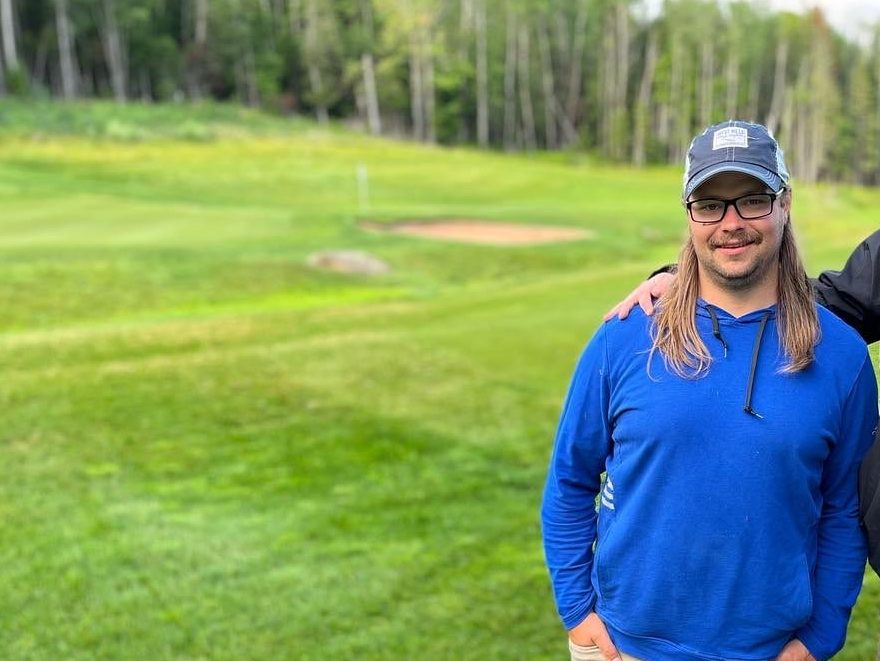
Filling Lincolns shoes will be Adrian Thomas, or AJ as we call him. AJ has been with us for 7 years and has also worked his way up through the ranks. If you see him out and about, congratulate him on his promotion, he has certainly earned it.
Now about the turf. This winter has been a season of variable conditions. We’ve seen some events that are generally not conducive to keeping a grass stand healthy through out the winter season. Ideally we would like a few feet of snow from November to late March and no ice development but this hasn’t been the year for that. If you go to the historical weather office for Environment Canada you can see where there were significant temperature changes. Snow/rain events followed by melts, followed by freezing temperatures. All of which contributed to ice build up over the winter season. During this type of winter we hope to see a warming period where the snow and ice are completely melted. In mid-January we came close to that, but some small pockets remained icy for the duration of the season.
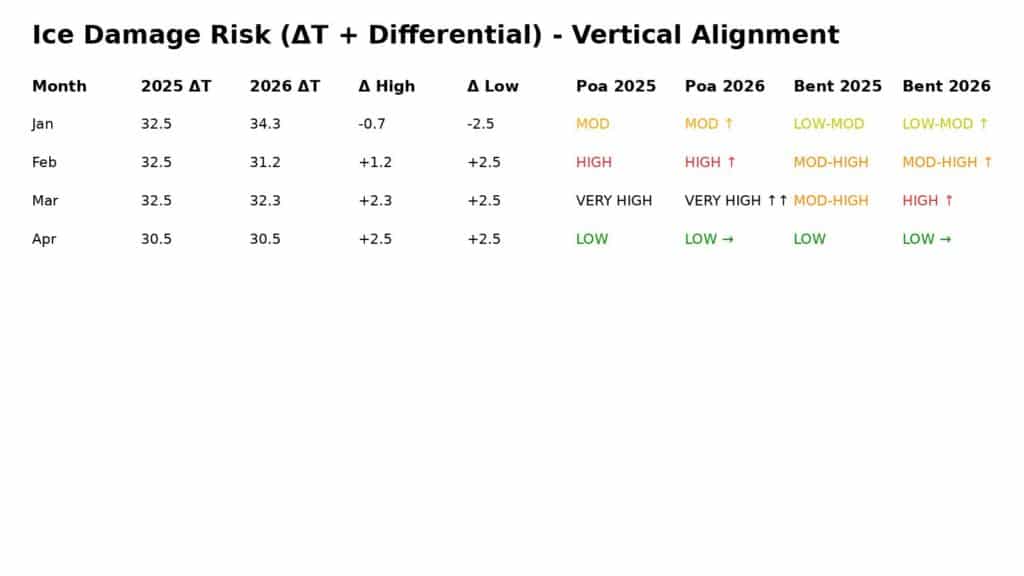
Those pockets of ice over the winter have resulted in pockets of ice damage around the course. We know from sampling some of turf in late Feburary. Here are some of those samples.
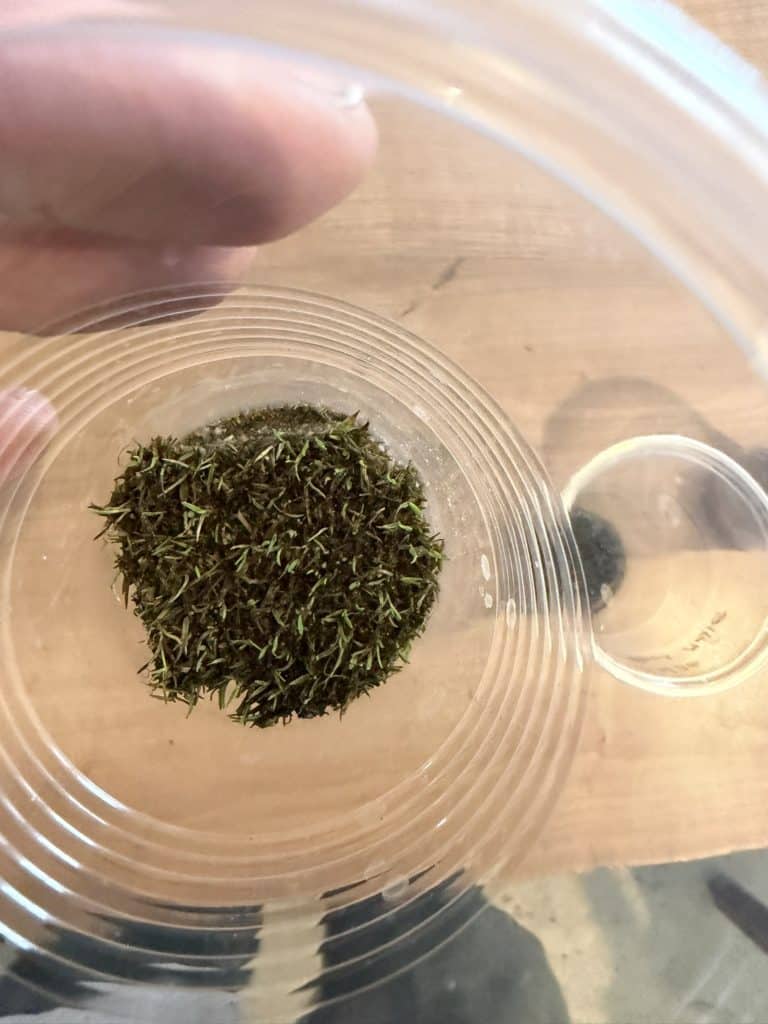
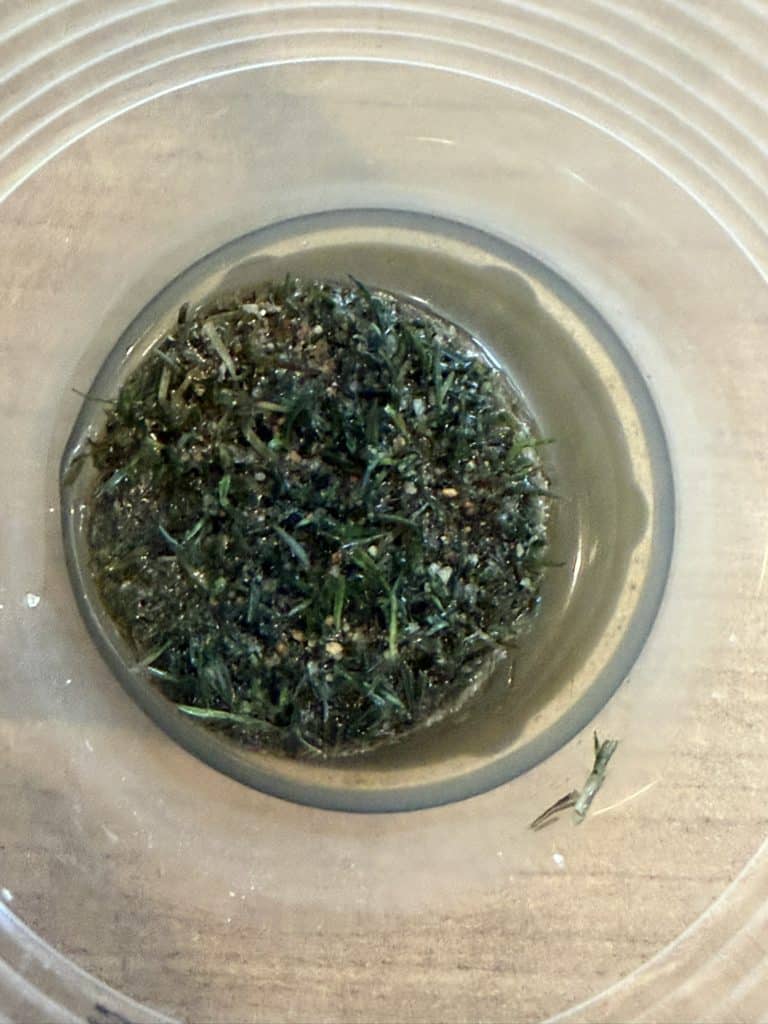
Understanding the outcome of the winter wont be fully realized until the turf is active and growing. Its important to separate the types of winter damage. Prolonged ice coverage can smother turf, usually 60 days for Poa Annua and closer to 90 for Bent grass.
The other form of winter damage occurs later in the winter/early spring. Bent grass generally doesn’t start breaking dormancy before a consistent 15 degrees for over a three day period. We haven’t really seen those temps yet so it’s hard to estimate the extent.
One benefit to freeze thaw/cycles is that they are devastating to Poa Annua, the weed turf grass that can take over putting surfaces. We spend quite a few dollars a year spraying products to limit the growth of Poa and mother nature just gave a huge lift. Here’s a patch on number 1.
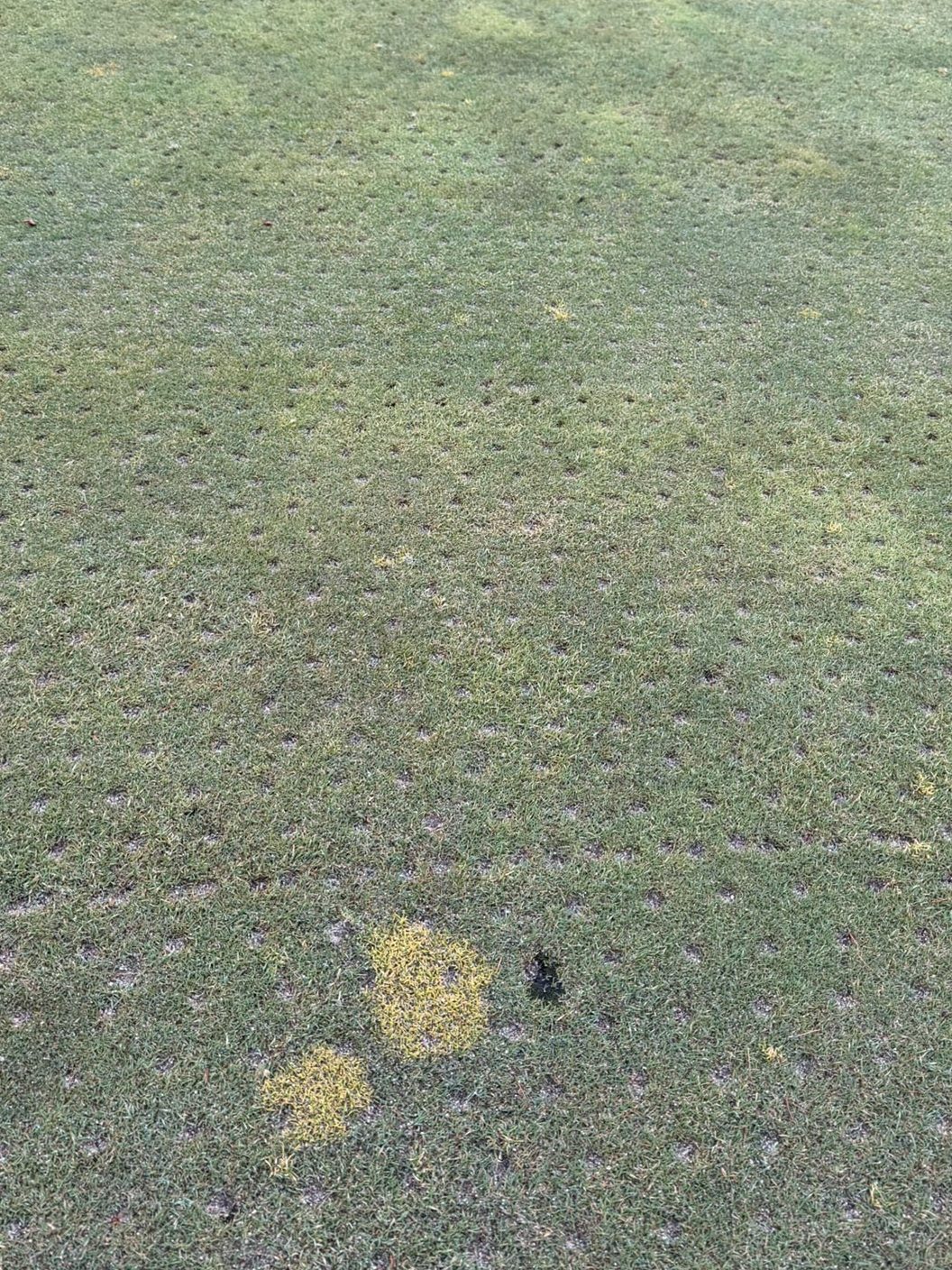
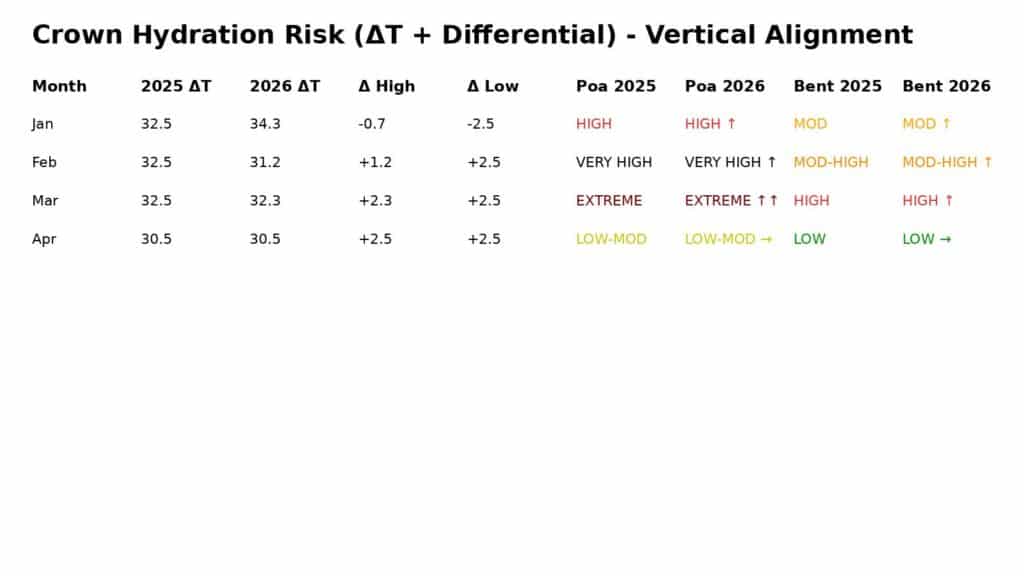
Poa breaks dormancy around 8 degrees, in time periods a little as just one day. This can be a problem for the plant during those spring days in March where the day time is 15 degrees and the night time is well below freezing. The crowns of the plant are flooded as the plant begins wake up during a warm day. During the cold night the fluids freeze and expand. The frozen liquid expands beyond the capacity of the container and the cell walls in the crown split. This damage is not evident immediately. Once the plant is warm enough to grow again, it loses the fluids through the broken cell wall and the plant desiccates, hence the colour in the photo above. This is called Crown Hydration Injury, a very common spring issue that is often confused for ice damage. This can happen to Bent grass as well but due to its slower wake up it’s less likely to suffer the same fate, which is why it is obviously a more desirable crop.
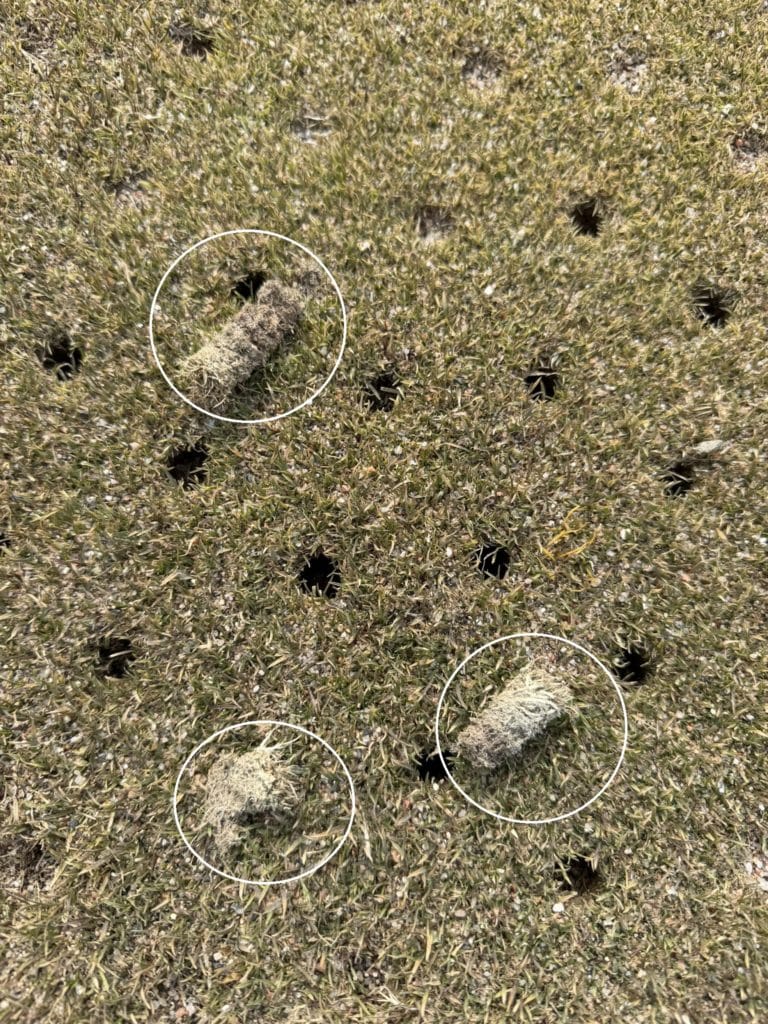
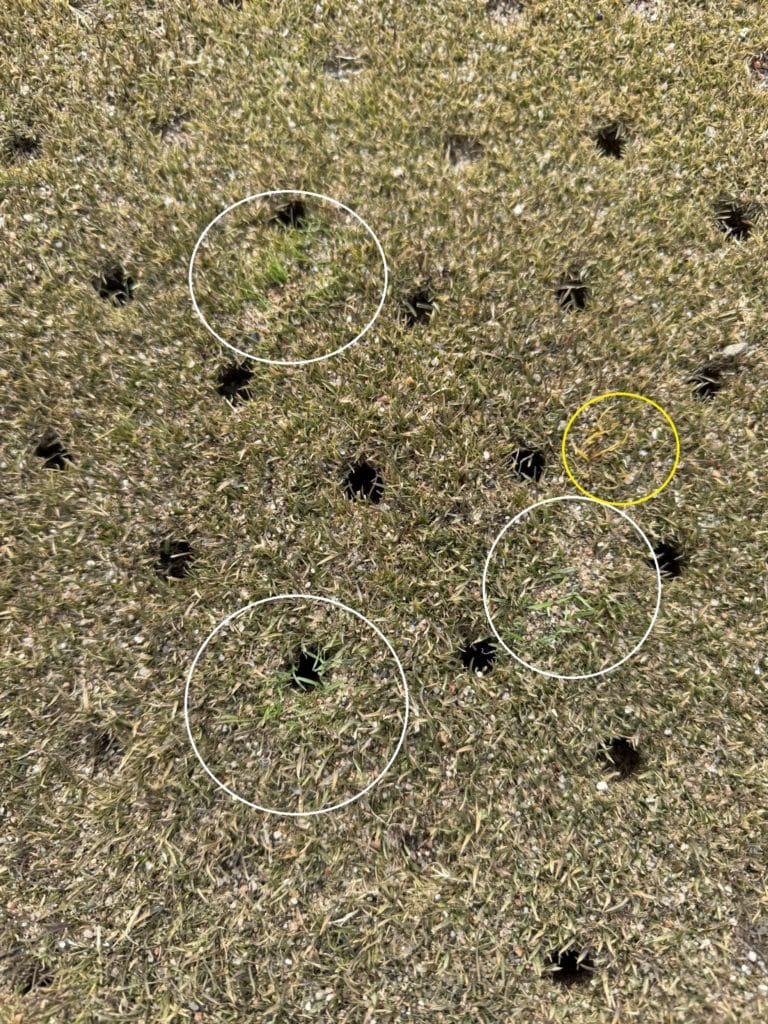
The two pictures above are helpful indicators for us when looking at the health of the turf. The first picture with the cores on it is from 16 green, the second is of the same location but with cores removed. If you look at the turf beneath the cores where it was sheltered and warmed but the reflective sun, is is growing and healthy. Its my expectation that the area surrounding it will also be the same once exposed to better conditions. In the yellow circle is a small stand of Pao Annua that has been killed by the winter conditions. This makes me happy.
If your somebody who requires information in a dataset, I tasked chat GTP to pull and chart some risk factors for us turf nerds to enjoy.
If your not into that skip ahead, but basically it says this year was more of a risk for crown Hydration Injury and Ice Damage, especially for Poa Annua.
At this point it would be silly for me to say the extent of the damage with any kind of certainty, however there is definitely is some damage. How this effects the opening for the year is yet to be determined, however with the colder temperatures and prolonged snowy conditions we can expect a normal opening.
Here are the openings for the golf course since we began an 18 hole course:
2018 – May 21 – zero temporary greens
2019 – June 3 (yikes) – 9 temporary greens
2020 – May 20 – zero temporary greens, closed sections on 11, 12, 13
2021 – May 12 – 5 temporary greens, some closed section
2022 – May 18 – 2 temporary greens
2023 – May 12 – (yikes) no information, but we think around 8 or 9 temps.
2024 – April 26 – no temporary greens
2025 – April 30 – no temporary greens
Please comment or send me an email at adam@westhillsgolf.com of you have any questions.
Thanks and see you out there!